
Why travel to the Galápagos Is Unlike Anywhere Else
Why Galápagos feels unlike anywhere else: where wildlife, stillness, and restraint create a travel experience shaped by presence rather than performance.
GALAPAGOS
1/6/20264 min read
By Jeanne Crouse
Writing about destinations that reward patience, context, and a more intentional way of traveling
Why the Galápagos is Different
The first thing you notice in the Galápagos is not what's there - it's what's missing.
There is no rush. No noise layered over noise. No sense that the place is performing for you. Instead, there is stillness, proximity, and an almost disarming calm that asks something of you as a visitor: slow down, pay attention, and behave differently than you might elsewhere.
The Galápagos isn't different because it's more biodiverse than other places. The Amazon or coral reefs far exceed it in species numbers. It's different because of how geography, isolation, and time have converged to create something that exists nowhere else in quite the same way: a living laboratory where evolution reveals itself clearly, and where the relationship between visitor and place has been fundamentally reimagined.
An Evolutionary Laboratory You Can Witness
The archipelago sits roughly 600 miles off the coast of Ecuador, far enough that most species arrived by accident; they were swept out on ocean currents, blown by storms, or rafting on vegetation. This created a natural filter. Once there, populations evolved in isolation, cut off from their mainland relatives and from each other across different islands.
What makes this truly distinctive is that the islands' young volcanic age - most are less than 5 million years old - means evolutionary changes happened recently enough to still be visible and understandable. The famous finches, with their different beak shapes adapted to different food sources, provided Darwin with a clear example of how species adapt to their environments. Each island feels distinct, reinforcing the sense that you are moving through a living process rather than a static museum.
Closeness That Is Earned, Not Staged
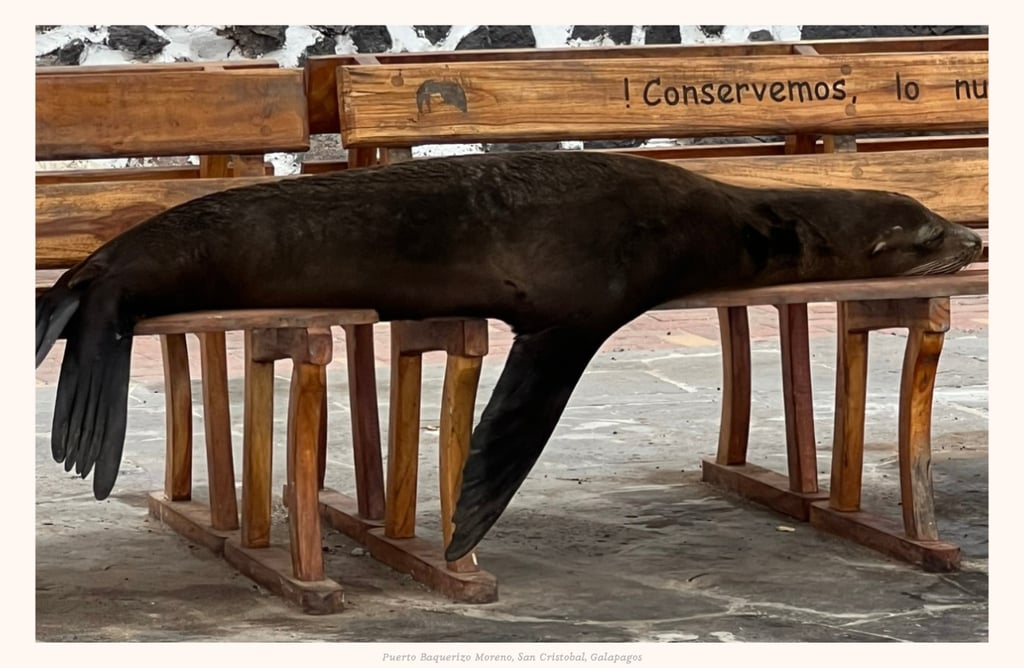
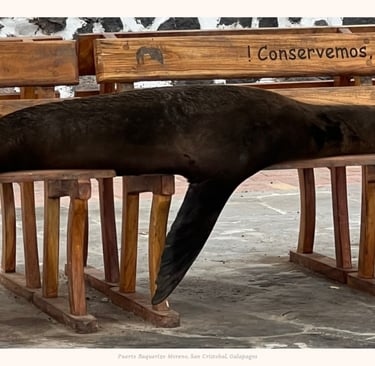
One of the most striking aspects of the Galápagos is how close you are allowed to be. Sea lions nap on benches. Marine iguanas sprawl across paths. Birds continue their rituals unbothered by human presence. Giant tortoises, flightless cormorants, and blue-footed boobies show remarkable tameness, allowing you to observe natural behaviors at close range.
But this closeness is not accidental, and it is not casual.
It exists because the islands had no large predators before humans arrived, so many species evolved without fear responses. And it persists because of decades of strict conservation policies, carefully enforced rules, and a shared understanding, among locals, guides, and visitors, that the privilege of being here comes with responsibility. You don't touch. You don't feed. You don't approach. You observe, quietly and patiently.
Because everyone follows those rules, the animals don't fear you. This dynamic fundamentally changes the experience. Instead of chasing encounters, you wait. Instead of curating moments, you witness them. The result is something far more meaningful than a checklist of sightings.
The Absence of Performance
In many iconic destinations around the world, tourism has shaped how places present themselves. Schedules are optimized, experiences are polished, and authenticity often becomes a carefully managed product.
The Galápagos resists that impulse.
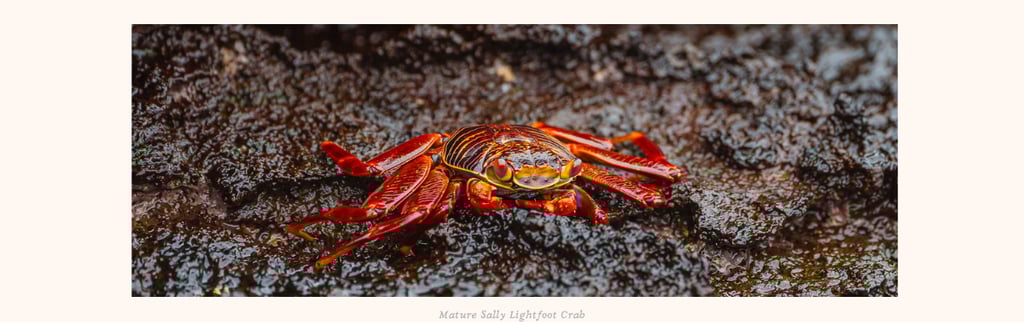
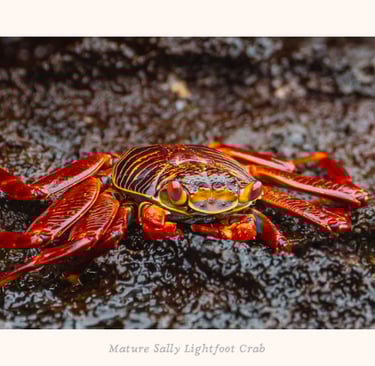
There is no sense that the islands are trying to impress you. The landscapes are stark and volcanic in some places, lush and ancient in others. The wildlife appears when it appears, on its own terms. About 80% of land birds, 97% of reptiles and land mammals, and over 30% of plants are endemic - species found nowhere else on Earth - but they reveal themselves gradually, through patterns and repetition, not through spectacle.
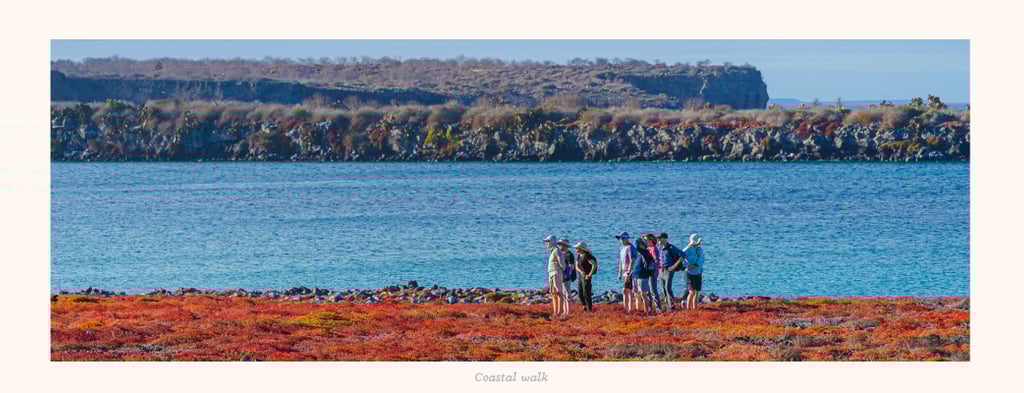
Even the daily rhythm of a visit, including early mornings, structured excursions, long stretches of quiet, reinforces the idea that you are stepping into an existing system, not one built around your convenience. This lack of performance can feel unsettling at first. It requires patience. It asks you to recalibrate expectations. But it is also what makes the experience feel honest.
Travel That Demands Presence
The Galápagos does not lend itself well to passive travel. You cannot simply show up and absorb it by proximity alone. The experience demands presence: mental, emotional, and physical.
Guides play a crucial role here, not as entertainers, but as interpreters. They provide context of evolutionary history, conservation challenges, subtle behaviors you might otherwise overlook. Their knowledge deepens the experience without overpowering it.
The rhythm of the days from early starts, small groups, limited access points, and structured time ashore are not inconveniences; they are safeguards. They ensure that the islands remain what they are, rather than what mass tourism might turn them into.
This is not a place you conquer. It is a place you are allowed into.
A Destination That Changes How You Think About Travel
What stays with you after leaving the Galápagos is not just the memory of animals or landscapes, but a shift in perspective.
You begin to notice how rare it is to travel somewhere that asks visitors to adapt to the place, rather than the other way around. You reflect on how often convenience shapes our experiences, and what is lost when it does. You start to recognize the value of limits, of intentional design, of saying "no" in service of something greater.
At a time when travel is more accessible than ever, the Galápagos stands as a quiet counterpoint. It demonstrates that preservation and access do not have to be opposites, but that balance requires discipline and respect, from institutions and individuals alike.
The Galápagos becomes more than a destination. It becomes a reference point: a reminder that thoughtful travel is not about seeing more, but about seeing differently. This perspective continues in why thoughtful travel matters more than ever.
It is an experience that feels unchanged by your presence, yet deeply shaped by your attention. And that, perhaps, is why it stays with you long after you leave.
Follow Us
Contact Us
Jeanne@CurioTravel.net
910-338-6978
© 2026 All rights reserved