
Cuba: When Travel Is Shaped by Context, Not Convenience
I returned to Cuba this week, moving once again through places I’ve been to and others that are new to me, aware that the experience here will unfold on the island’s terms, not my own.
1/26/20264 min read
By Jeanne Crouse
Writing about destinations that reward patience, context, and a more intentional way of traveling
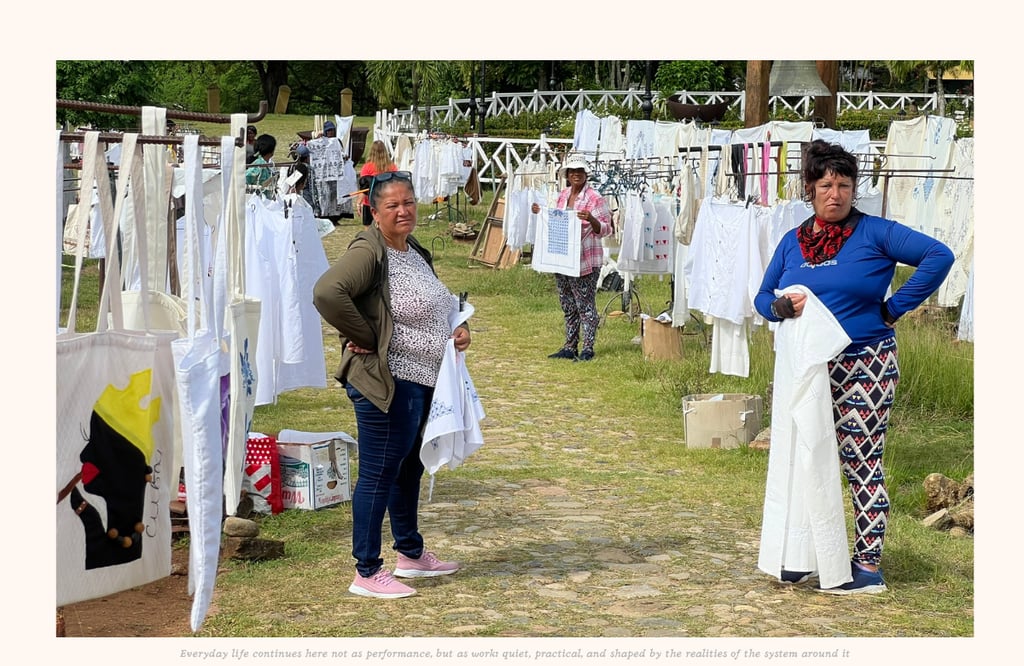
Travel in Cuba asks visitors to loosen their grip on control and convenience and to pay closer attention to the living systems they are stepping into rather than the services they expect to consume. Moving through the island means sharing space with shortages, improvisation, and resilience that are not staged for visitors—they are simply the conditions of daily life.
This is not discomfort for effect, nor hardship curated as experience. It is the reality of a country shaped by long-term economic stress, political constraint, and adaptation. For travelers willing to engage with that reality rather than resist it, Cuba becomes a clear case study in what thoughtful travel actually requires.
Why Cuba Demands a Different Mindset
Cuba is not inherently “hard” to travel to. It is, however, a place where everyday constraints, including power outages, fuel shortages, and limited supplies, shape what is possible on any given day. The friction many visitors feel comes less from danger or disorder and more from the gap between expectations of easy Caribbean leisure and the reality of an economy operating under sustained pressure.
Tourism here does not float above local life in a sealed resort bubble. It runs alongside it and may often compete with it, for food, transportation, electricity, and attention. When visitors expect the destination to orbit smoothly around their plans, they collide with a setting where infrastructure is already stretched thin for the people who live there.
Daily Life Is Not a Backdrop
Across much of the island, Cubans are not performing culture for an audience. They are working multiple jobs, standing in long lines for essentials, and relying on family and neighborhood networks to keep households running. Private entrepreneurs, from home hosts, drivers, and small restaurant owners, often describe their work less as hospitality and more as constant problem-solving amid shifting rules and chronic scarcity.
Empty shelves, fuel lines that stretch for blocks, and intermittent blackouts make improvisation visible. In this context, simply buying a meal, accepting a schedule change, or sitting through a power outage becomes a form of participation in daily reality rather than a curated experience running quietly in the background.
Infrastructure Tells a Story
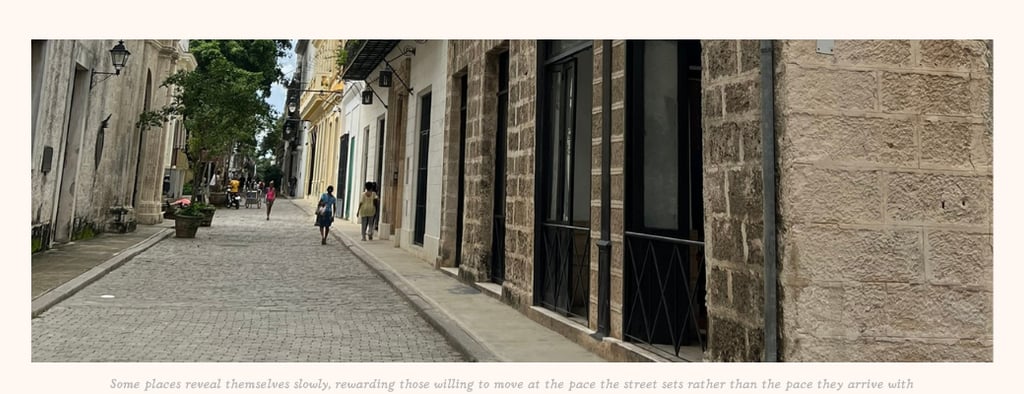
Transportation, lodging, and basic services in Cuba are not merely “behind.” They are the physical imprint of decades of underinvestment, centralized control, and external pressure. Aging buses, potholed highways, and sold-out routes reflect fuel shortages, lack of spare parts, and policy choices that have prioritized certain sectors over everyday mobility.
What can feel like inefficiency to a visitor often has deep structural roots, from the long-running U.S. embargo to internal economic policies that often constrain private initiative. When travelers understand that a blackout or canceled bus is part of a broader survival strategy rather than a customer-service failure, frustration can give way to a more nuanced, and often more empathetic, reading of the place.
Seen this way, infrastructure becomes less of something to rate and more of something to read as a narrative of endurance, compromise, and ongoing adjustment.
Flexibility Is the Real Currency
In Cuba, the most valuable resource a traveler carries is not cash or a flawless itinerary but the ability to bend when the day does. Plans shift. Transportation falters. Neighborhoods go dark. The journey becomes a sequence of adjustments rather than a march through fixed expectations.
Within that looseness, human connection often replaces transactional efficiency. A neighbor helping locate a taxi when fuel is scarce or a host improvising breakfast during a blackout can transform “inconvenience” into the moment that defines the experience.
Thoughtful travelers tend to thrive here not because they tolerate anything without question, but because they recognize that their own convenience is not the central organizing principle of the place they are visiting.
What Thoughtful Travel Looks Like in Practice
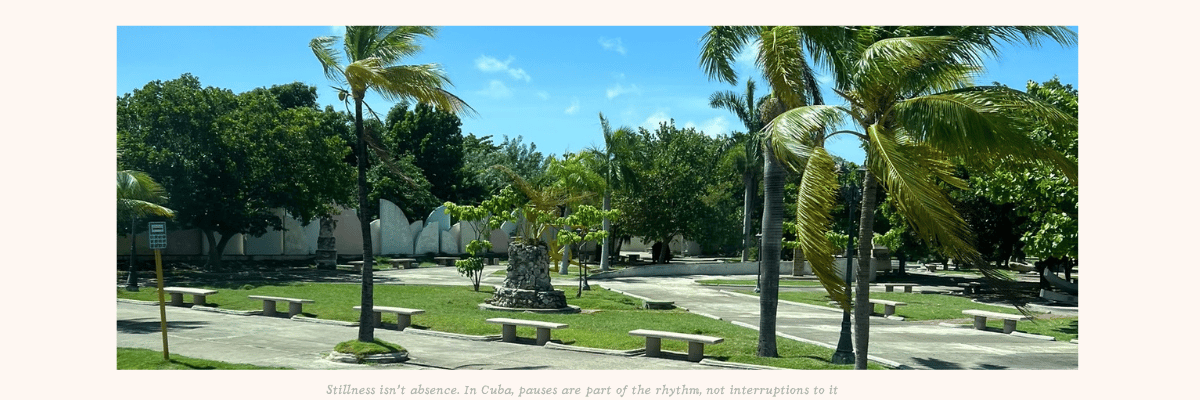
Some destinations reveal themselves easily. Others, like Cuba, require patience, awareness, and a willingness to engage on their own terms. Thoughtful travel begins with recognizing that how we move through a place matters as much as where we go. By slowing the pace, respecting local rhythms, and understanding the realities that shape daily life, travel becomes less extractive and more reciprocal. In places where systems are strained and resilience is ongoing, thoughtful travel isn’t a preference. It’s what allows the experience to unfold with honesty and meaning.
In Cuba, thoughtful travel often means slowing the pace: fewer cities, looser schedules, more time walking the same streets and noticing how people live with constraints and workarounds. Instead of stacking days with timed tickets and back-to-back activities, travelers leave room for conversation, interruption, and the unplanned event that reshapes the day.
It also means respecting how systems function, even when they feel opaque: honoring local payment norms, working within limited supplies, and accepting regulations without demanding exceptions. This is not about romanticizing hardship or turning scarcity into spectacle. It is about moving through a strained ecosystem with restraint, curiosity, and awareness. In Cuba, restraint also means recognizing that every demand from transport, and electricity, to supplies,draws from systems already under stress.
Cuba makes visible dynamics that remain hidden in more polished destinations, where reliable power, abundant imports, and layered service industries smooth over the costs of convenience for residents. Here, the links between policy, scarcity, and daily resilience sit close to the surface.
I work with travelers who understand that destinations like Cuba aren’t best approached independently or improvised without context. When the fit is right, I help design travel that provides enough structure to navigate complexity, and leaves room for the conversations, adjustments, and moments that give the experience meaning.
Why Cuba Clarifies the Value of Thoughtful Travel
By stripping away much of the frictionless infrastructure that underpins modern leisure travel, Cuba reveals how deeply many travelers expect speed, choice, and comfort as default entitlements. Those who stay present, listen more than they judge, and resist the urge to demand fixes on their own terms often leave with a changed understanding of what travel can be - and what it asks of them. Here, the effects of tourism, helpful or harmful, are harder to hide because daily life and visitor life run so close together.
Over the coming days, I’ll share a series of reflections from Cuba: small, ordinary moments that show what thoughtful travel looks like when you stop expecting a destination to bend to you.
Follow Us
Contact Us
Jeanne@CurioTravel.net
910-338-6978
© 2026 All rights reserved