
Cuba Inside the Experience: Culture Is the Constant
In Cuba, culture isn’t staged for visitors: it unfolds in daily life, conversations, music, and neighborhood rhythms that reward attention over spectacle.
THOUGHTFUL TRAVEL
1/31/20262 min read
By Jeanne Crouse
Writing about destinations that reward patience, context, and a more intentional way of traveling
This short reflection is part of an ongoing series of observations from Cuba - quiet moments that reveal how travel changes when context, not convenience, sets the terms.
What Cuba may lack in material consistency, it makes up for in cultural presence.
Culture here isn’t curated for visitors or staged for effect. It isn’t scheduled, ticketed, or framed as an attraction. It exists whether you’re watching or not: it is woven into daily routines, conversations, and the rhythms of neighborhoods that continue long after visitors move on.
This is where Cuba feels most alive.
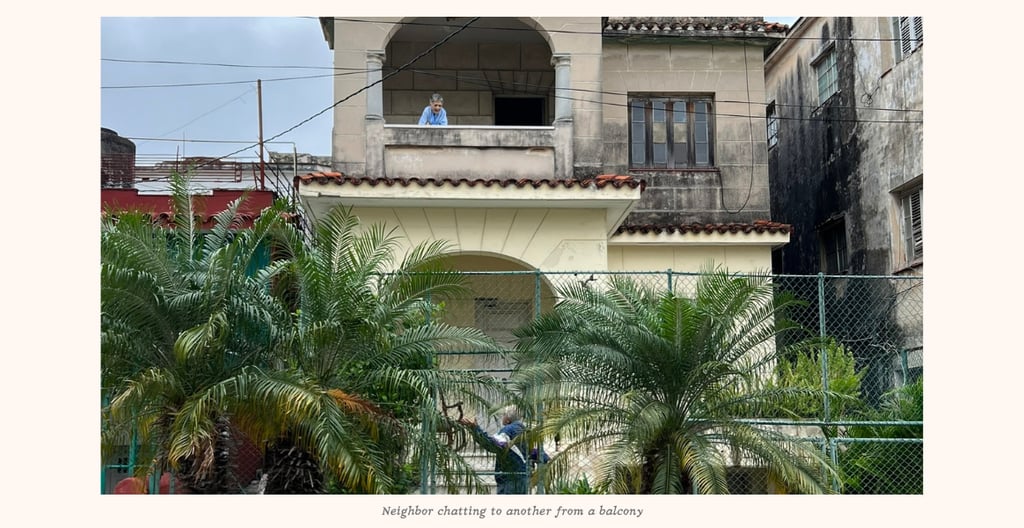
Not in monuments or highlights, but in street-level interactions: neighbors calling to one another from balconies, a casual exchange that turns into a conversation, music drifting from a doorway without announcement. These moments aren’t designed to be noticed. They simply happen, unfolding alongside ordinary life.
Music, in particular, is not a performance layered on top of the day. It is part of it. It surfaces spontaneously, sometimes polished, sometimes improvised, often unplanned. It appears in formal venues and informal spaces alike, not as an escape from reality but as a continuation of it. Conversation carries the same quality: open, fluid, unhurried, shaped by curiosity rather than transaction.
What becomes clear over time is that culture in Cuba doesn’t exist in isolation from constraint. It exists alongside it. Scarcity, delays, and unpredictability don’t erase cultural expression; they coexist with it. Humor softens difficulty. Creativity fills gaps. Presence replaces efficiency.
For travelers accustomed to destinations where culture is packaged as an experience - scheduled performances, curated neighborhoods, polished encounters - this can take adjustment. There is less to consume and more to notice. Less spectacle, more participation.
Participation doesn’t require fluency or insider access. It requires attention. Sitting longer than planned. Listening more than directing. Allowing conversations to wander. Walking the same streets at different times of day and noticing how they change; not dramatically, but subtly, through small shifts in sound, light, and movement.
Over time, this approach changes the texture of travel. The focus moves away from checking boxes or collecting moments and toward understanding how people live within the structures that shape their days. Culture stops being something you seek out and becomes something you move through.
This is why Cuba often leaves a lasting impression on travelers who are willing to slow down. Not because it offers more, but because it asks for less control. It invites presence rather than performance, curiosity rather than consumption.
Travel here is less about spectacle and more about participation.
And in that participation: quiet, unannounced, and often unphotographed, Cuba reveals itself with remarkable clarity.
Follow Us
Contact Us
Jeanne@CurioTravel.net
910-338-6978
© 2026 All rights reserved